
Sabrina Ortiz
Sabrina Ortiz is a Senior Reporter at The Deep View. Previously, Sabrina led AI coverage at ZDNET. Sabrina graduated with an M.A. in Journalism, Business and Economics Reporting from the Craig Newmark Graduate School of Journalism at CUNY and a B.A. in Media and Journalism and Political Science from the University of North Carolina at Chapel Hill.
Articles

Can OpenAI's Terra 6.1 match Sonnet on value?
Agentic tasks that use a computer demand strong on-screen awareness, multimodal understanding, and speed, ideally without running up your token costs. OpenAI thinks it has cracked the code.
On Monday, OpenAI launched GPT-6.1 Terra, a model the company says is designed to deliver "fast and capable computer use at scale." In practical terms, this is OpenAI's mid-tier model that competes with Anthropic's Sonnet. Terra can deliver more precise computer use at 50% lower cost than GPT-5.6 and GPT-6.1 Sol. The company is positioning the model's selling point as getting more bang for your buck and, as a result, enabling developers to automate high-volume work.
"In ChatGPT Work and Codex, your plan goes further with GPT-6.1 Terra—the same usage allowance covers more tasks than with GPT‑5.6 Terra and substantially more than with GPT‑6.1 Sol or GPT‑6 Astra," OpenAI stated in the release.
To back up its advanced agentic performance claims, OpenAI put GPT-6.1 Terra’s computer-use capabilities to the test on Agents’ Last Exam, a benchmark designed by Berkeley RDI and over 300 industry experts to test agents' performance specifically on long-horizon, economically valuable tasks with verifiable outcomes. The company reported the results were:
- GPT-6.1 Terra scored 15 percentage points higher than GPT-5.6 Terra at about one-third the cost while on medium reasoning effort.
- Performed on par with GPT-6 Astra at only one-tenth its price per token.
- Terra can complete tasks over three times faster than GPT-6 Astra and GPT-6.1 Sol.
- Compared with Claude Opus 5.5 (a step up from Sonnet), the company reports that, at max effort, Terra is over three times as token-efficient and costs one-fourth as much per token. Of course, note that that's a previous-generation model.
Beyond benchmark performance on MMMU-Pro, OSWorld 2.1, and Terminal Bench 4, the company is also touting advances in factuality and alignment. In its internal benchmark of error-inducing prompts, OpenAI reports that the error rate at low reasoning effort fell from 53.6% with GPT-5.6 Terra to 16.7% with GPT-6.1 Terra, and at maximum effort, the error rate fell by 18 percentage points to 4.3%. In internal evaluations, OpenAI also found that, compared to GPT-5.6 Terra, GPT-6.1 Terra is more likely to "stay within scope and honestly disclose limitations and potential blockers to the user." GPT-6.1 Terra also showed strong resistance to prompt injection tests.
GPT-6.1 Terra is available to all paid users in ChatGPT Work and Codex, while developers can access it through the OpenAI API.
Our Deeper View
As people become more familiar with AI agents, more people are willing to hand off their tasks and workflows to agents. While general demand is just beginning with tools like OpenAI Dots, Meta Muse, and Claude Duet, it's growing even faster in the enterprise. Of course, the enterprise has the most to gain by maximizing AI use, systemizing it, and then applying it to high-value workloads. To meet that need, models need to be optimized to balance lower cost, higher capabilities, and speed, which is exactly what OpenAI targeted with this release. The mid-tier Terra models are naturally well-suited to slide into that sweet spot. This likely impacted OpenAI's decision to give its mid-tier models more attention after skipping them last month when it focused on high-end Sol and the budget model Luna instead.

Pixar, Boston Dynamics vets rethink the home robot
The vision of a robot that handles household chores isn't new, but a new market entrant has drawn attention for one quality that may set it apart: its cute appeal.
Tuesday Labs is a Y Combinator- and FCVC-backed New York City robotics startup founded by Ros Shinkle, former staff roboticist at Boston Dynamics. This week, the team introduced Voxel Series-1, marketed as a "droid butler" that can help with household chores. I attended its NYC launch event, and the biggest standout was how disarming Voxel felt, thanks to its purposeful, stout, bright, chirpy droid-like look, brought to life through collaborations with illustrators, character designers, and animators.
"In building this robot, we drew from our favorite characters in film and literature; we drew from human-robot interaction research; we pulled from my mom's old collection of vintage etiquette guides, and of course, more than anything, from our own experience, building robots, deploying them into the real world, and watching how people interact with them," said Shinkle at the event.
The company claims Voxel can do tasks like putting everything back where it belongs, finding lost items, grabbing items for you, watering your plants, and more. In the live demo, he was puppeteered and did nothing beyond walking around and making cute noises, which isn't unusual for a product that still has a long runway until it ships to customers. Some additional specs shared by the company include:
- 7-DOF (degrees of freedom) arms with fully actuated wrists and 1-DOF Grippers
- Z-shaped legs with impact-aware feet
- You can interact with it via audio and visual exchanges
Limited reservations for Voxel are available now for $200, and while the final cost isn't confirmed, the company estimates the price will be $20,000. Despite the steep price tag, at least 63 pre-orders have already been placed, as they shared reservation #63 on social media, and Series-1 units are individually numbered on the production line and assigned in the order reservations are made. Shipping won't begin until 2028.
Our Deeper View
I have been covering robotics for a long time, and the argument for humanoid robots is typically that they offer the best form factor for navigating a world made for people shaped like us humans. That makes sense logistically, but I can't really imagine many people being comfortable with a strong robot the same height as you, if not taller, walking around your home. This sentiment was especially strong at IFA, where many humanoid robots were so agile and highly functional that I actually got the heebie-jeebies. Not to mention the risks of something going wrong, such as toppling over and accidentally hurting someone. Voxel is a unique approach because it is so endearing to look at and interact with, while still being capable thanks to careful design. While, of course, we will have to see how it actually performs these tasks, likely much closer to the ship date, kudos to the team for at least nailing the design.

Independent audits catch what OpenAI missed
OpenAI may have just proven why third-party evaluations are crucial to frontier labs.
OpenAI hosted two staff members from AI safety evaluation firm METR and Redwood Research, giving them company devices with access to OpenAI’s codebase and internal infrastructure, as well as the chance to interview technical staff, according to METR. The evaluators identified gaps and vulnerabilities, and OpenAI has since told METR that “all of the vulnerabilities identified that impact their production safeguards stack have been patched.”
The pilot took place for three weeks from July 21 to August 11, coincidentally the same day OpenAI disclosed the Hugging Face incident. METR discloses that it did not evaluate later changes, such as expanding monitoring to reinforcement learning training, but rather analyzed the monitoring as it existed at the start of the pilot. Some of the vulnerabilities identified included:
- A way for agents to conceal hundred of actions from monitoring;
- The monitoring system was only triggered when agents returned control to the user, meaning they could circumvent monitoring by continuing to take actions;
- Due to the coverage gap, METR estimates that "on the order of 10% of internal Codex traffic was unmonitored from May to July." It says OpenAI had also independently identified the issue shortly before the exercise began.
OpenAI has since said that the findings helped "strengthen safeguards" and will help shape future collaborations with METR and other third party evaluators. METR recently published a proposal for third-party teams to assess control and monitoring of internal agents, comprising five core subquestions. For the OpenAI pilot, the evaluators focused on two:
What fraction of agent traffic was monitored, and could agents circumvent this monitoring?
Our Deeper View
This highlights the exact reason that there is a movement pushing for third-party evaluations: they can find blind spots initially missed. Even leaving aside the incentive that companies may have to handle evaluations internally and leave out safety pitfalls, assuming all positive intent, at the rate and speed the companies are moving, it is possible that they let things slip through the cracks. Additionally, when you are too close to a subject, it's easier to miss red flags. It's the same reason that journalists have copy editors — not because we don't understand grammar or know how to write, but because we have to move quickly and can become too attached to stories to see gaps in them.

1Password tackles the AI agent access problem
As AI agents become increasingly capable, the upsides and tradeoffs grow with them. 1Password is betting its platform can address some of the biggest risks.
On Thursday, the company launched 1Password for Agents, a platform that gives personal AI agents access to the passwords they need to complete tasks on users' behalf without ever seeing or storing the credential. This mitigates the risk of the agents using the password to take unauthorized actions, and offers peace of mind to users by limiting AI vendors' access to personal information.
"For the last two decades, 1Password has helped people secure their credentials through every new wave of technology," John Torrey, Chief Business Officer at 1Password told The Deep View. "1Password for Agents is designed to reduce the risk by keeping credentials out of the agent’s access and requiring the user’s approval before it signs in."
The company said that, when the agent reaches a sign-in form, it uses a unique digital key to verify its identity to 1Password. Then the user gets to see which credential the agent needs to use and why, and can approve the request on their device. Finally, 1Password fills the credential into the sign-in form directly instead of handing it over to the agent. Once the website accepts it, it is removed from the sign-in form.
Users can use 1Password with their AI agent of choice and initial integrations, including Meta's Muse, Anthropic’s Claude, OpenAI's Dots, and SpaceXSI Grok Bot, with more integrations to come.
"1Password for Agents is built on a shared security model, where 1Password and our partners each have a clear role in protecting people," added Torrey. "Only partners who agree to uphold shared security principles and pass a security review can offer it."
This release builds on other AI authentication platforms the company has already released, such as 1Password for Claude, a browser integration that gives Claude access to stored credentials without actually exposing the credentials to the model. It also comes amid the recent boom in personal agents, with Meta, OpenAI and now Anthropic each unveiling their own always-on AI assistants.
Our Deeper View
AI agents are only as useful as the access you’re willing to give them. However, trusting them is becoming increasingly challenging, with agent security incidents piling up, ranging from large-scale cases like the OpenAI Hugging Face breach to individual impacts, such as Muse's individual user incidents. A core underlying issue with all of these cases is giving AI agents too much access. Solutions like this from 1Password can support a better middle ground, in which users aren't afraid of giving it access but at the same time can stay protected. My concern goes a step beyond: The fact that many people don't have the AI literacy to even know that they need a solution like this to begin with.
ChatGPT gets a long-overdue privacy feature
Many users are turning to ChatGPT for their most sensitive questions, from mental health to physical ailments. That intimacy is precisely why users may want to keep those chats private.
On Wednesday, OpenAI launched a feature that finally makes that possible: Locked Chats in ChatGPT. This feature enables users to move chats outside of their regular chat history into a separate "protected" space which needs to be unlocked with a pin on ChatGPT's browser version. On supported devices, users can also Face ID, Touch ID or device unlock instead of a pin. The feature is rolling out to Free, Go, Plus, Pro, Business, Enterprise, and Edu plans.
The new messages sent in locked chats won't be used to update the memory used in your regular chats, meaning that future conversations won't reference that information. This minimizes the risk of accidentally revealing private information in other answers that someone may be looking over your shoulder or using your account. In OpenAI's example, a user hides a chat regarding a proposal they are planning, presumably to not ruin the surprise.
While it may seem like password protecting a device is enough, it is common for people in relationships to know one another's passcodes. A Pew Research survey found that 75% of Americans who are married, cohabiting or in a committed relationship report sharing their phone passcodes with their spouse or partner. It is the same reason that similar "hiding" features exist for camera rolls, messages, and social media apps.
Prior to this, the only feature that accomplished a similar purpose was the Temporary Chat feature. When using this feature, information you share is also not kept in your history or saved to your memory. However, the biggest downside is that you can't revisit the thread of conversation and, because ChatGPT doesn't remember it, every time you want to reference that information, you have to reprompt it.
Our Deeper View
Typically, when talking about AI features and privacy, people's major concerns are regarding whether the AI lab can reference your chats, use them for training, or worse. However, as AI use becomes more pervasive, easy to use and accessible across everyday devices, people are trusting these models with increasingly private information. However, just like you may not want your partner sitting in on an embarrassing doctor's visit,, you may also not want them to have access to certain conversations, whether those conversations be deeply personal or benign, such as planning a surprise. The added choice of selecting your own boundaries seems like an extremely helpful feature that I personally am excited for.
Can AI free up scientists to think bigger?
Concerns over AI-generated content polluting scientific journal submissions have led many to question its role in research, but recent studies from MIT point to a more nuanced reality.
The use of AI in science raises questions on several levels. The most visible concern is "AI slop," the worry that AI-generated work is eroding research quality. A less discussed but equally important question is economic: even if AI is useful, does the time it saves scientists justify what it costs? MIT CSAIL’s paper AI Disruption and Falling Costs in Theory Research tackles exactly this question, and its findings are promising.
To determine the true value of these AI models, the researchers compare how models released from December 2024 to April 2026 solved cutting-edge theory questions in cases that have ground-truth human answers that were entirely unavailable to the AI. The answers came from 254 recent arXiv papers from seven scientific domains spanning mathematics, physics, and economics. The researchers reported that in those sixteen months, the changes in the models were "enormous":
- The share of problems for which models reached the same conclusion as the human authors (got full marks graded against the original research), rose from 3% (o1) to 35% (GPT-5.5) marking a 22 percentage point increase per year.
- These results were achieved at minimal cost, approximately $5 per attempt (or $15 per success) for GPT-5.5.
- Compute spending per full-marks answer fell from roughly $170 to $15, including failed attempts but excluding human labor and independent verification.
- A "back-of-the-envelope" calculation suggests that AI costs are less than 0.3% of what it would cost to have a human expert solve these problems.
Despite AI becoming this much more helpful, it doesn't mean its role in research is as simple as plug and play. The researchers observe that the value driven from the AI depends on the share of research costs and the savings achieved with them, citing an example of an AI model which in order to perform well would need extensive and costly training.
The researchers also draw attention to the fact that when some tasks become cheaper to do, the structure of science will need to evolve to take advantage of it. For instance, even when scientists save seven hours per week using AI, they have a growing backlog of untested hypotheses and substantial demand for output verification.
"Under these conditions, we would expect the field to evolve so that more scientists are focusing on these other complementary tasks," the researchers stated in the paper. "Based on our results, we would expect similar adjustments within the theory community, as some of their historical tasks become much cheaper to do with AI."
Our Deeper View
Some of the more exciting, useful, and benign use cases of AI involve breakthroughs in research. Yet there seems to be a lot of hesitancy about using it in this domain, because the ability to rapidly create more content with AI has led to watering down the quality of some research submissions. Arxiv wrote about this issue just this month as it has had to update its rate limit policy due to the influx of submissions, fueled by AI, and also, the increase in "dense, AI-written papers" described as "low-value." This MIT research presents the other side, in which AI could help fuel further breakthroughs by performing tasks that net out to be less expensive than the scientist doing the work themselves. The key here is that it doesn't replace the scientist, as they would still be the person checking the results, picking the right questions, and making the larger-picture connections (which they would have more time to do). It's also important to highlight that these models are extremely capable, as highlighted in the report or everyday breakthroughs. Just today, Anthropic published a report explaining how Claude designed protein binders against scorpion neurotoxins, part of a broader experiment to see how Claude can accelerate drug discovery.

AI’s public good push is about more than giving
Public sentiment toward the AI industry is broadly negative. Now, the companies are leaning into public-good initiatives to try and change the narrative.
On Sunday, Anthropic announced the Anthropic Public Benefit Fund, a new nonprofit arm that, subject to stockholder approval, will receive 5% of Anthropic's shares, with an additional 2% added at the board's discretion for every 50% increase in the company's value above the a set baseline, according to the blog post. Anthropic says the Fund is intentionally structured in a way that, the larger it gets, the more it can contribute to society.
While the company already operates as a public benefit corporation, or a company built to balance profit with public good, Anthropic says this new arm will have increased flexibility and scale to take actions such as making large donations to traditional nonprofits.
The fund will also work in tandem with the public good initiatives it already has in place, including:
- Committing $200 million to the Anthropic Economic Futures Research Fund that focuses on research of the economic impacts of AI;
- The companies' co-founders' pledge to donate 80% of their equity holdings;
- And the equity donation match program that allows employees to pledge equity which Anthropic matches. Half of its employees participate in it currently.
Meanwhile, Elon Musk, CEO and founder of SpaceX (and its AI arm known as SpaceXSI) announced on X that next year, he plans to give one of his SpaceX shares to "every kid in America." He also claimed that it would be the first of many, offering no additional details.
As CNBC reported, Musk currently owns about 4.8 billion SpaceX shares, and there were 72 million children under 18 in the US as of July 1, 2025, according to census data. Musk would be, therefore, giving away about $10.5 billion worth of shares, using SpaceX's closing stock price on Friday. As this announcement is limited to an X post, and Musk has a track-record for not following through on philanthropic promises, there is no guarantee that it will actually come to fruition. Yet, even if it does, it would still be lapped by Anthropic's contributions, which will likely come out to the $75 billion to $100 billion range, according to Reuters.
Our Deeper View
There is no denying that, at face value, these are generous donations whose outcomes would be beneficial, and certainly better than no contribution at all. It is also worth noting, however, what these companies stand to gain from taking actions of this sort. Prioritizing public perception is becoming increasingly necessary for them to carry out the plans they need to maximize profits. The data center buildout, for instance, depends in large part on local and federal policymakers, whose decisions are influenced by how they are perceived by the public. Without sustained goodwill, that support may not materialize. Securing favor with those in a position to influence those decisions matters just as much. Anthropic is in an especially vulnerable position: the company could go public as early as November, in what would potentially be the largest IPO of a public benefit corporation ever, and markets are moved by investor perception.
Why enterprise AI ROI goes beyond efficiency
Though enterprises are eager to deploy AI, returns are still eluding many of them.
The Wharton School of the University of Pennsylvania has published its fourth annual report on the state of AI since the launch of ChatGPT, with the findings becoming one of the most closely watched bellwethers in the industry. Now, the report turns to the question everyone is asking: who is winning with AI, and what is their secret?
The survey, created in collaboration with market research and analytics firm GBK Collective, surveyed 1,416 US enterprise leaders and entry to mid-level employees, finding that there is a widening gap between organizations that simply implement AI and those who are seeing more meaningful transformations. The three markers of AI success it identified are proving value, transforming workflows, and aligning the organization around AI. However, only 7% of organizations surveyed succeed across all three metrics.
"Companies are now moving into the harder phase: integrating AI into how work gets done, learning new skills, changing processes, reorganizing departments. It’s like changing the engine while the car is running," Brian Smith, executive vice president of the AI, cloud and enterprise technology practice at GBK, told The Deep View. "That is hard work, and a lot less exciting than the early experimenting."
The report calls this year the fourth "wave" of AI, where the tech has been embedded in the core of enterprise operations, with 62% using the tech daily, 91% using it multiple times a week, and 73% reporting significantly changed workflows as a result.
Yet, the report identifies major flaws in adoption, including how companies are actually measuring ROI.
- A large portion of respondents, around 40%, reported judging return on investment by hours saved. Net-new revenue was the least utilized metric for success, with 27% reporting that they track this.
- However, the departments tracking returns by more than time saved are doing better comparatively: 35% of departments that track at least one growth measure report strongly positive returns, against just 13% of those tracking efficiency alone.
- Only 22% of managers look to AI to grow the business, whether through new revenue, new products, or better customer experience. Meanwhile, more than half are focused on improving productivity or cutting costs.
One way companies can implement more meaningful deployments of AI include having a designated Chief AI Officer position: 58% of managers with a newly designated CAIO report strongly positive ROI. Additionally, as enterprises lean into AI efficiency over tokenmaxxing, in tracking AI spend correlates with higher reported return.
Our Deeper View
Perhaps the most meaningful part of this report is seeing how the trajectory has changed over the past years. It allocates the first two "waves" of AI as the years 2023 to 2024 as exploration, marked by trial, error and experimentation by early adopters. Then, by wave three, which was 2025, regular usage of AI became more deeply integrated. Now, in wave four, as the report states that "adoption is no longer the question." Understanding this business mindset and why so many enterprises are willing to invest so much money so quickly also helps understand why the AI labs have redirected their attention to working professionals, creating two forces that are largely driving the AI market.
Amazon’s edge in AI wearables is its ecosystem
From smart wearables to AI-enhanced apps, using AI to log your days has become one of tech's hottest trends. Now Amazon is joining the race.
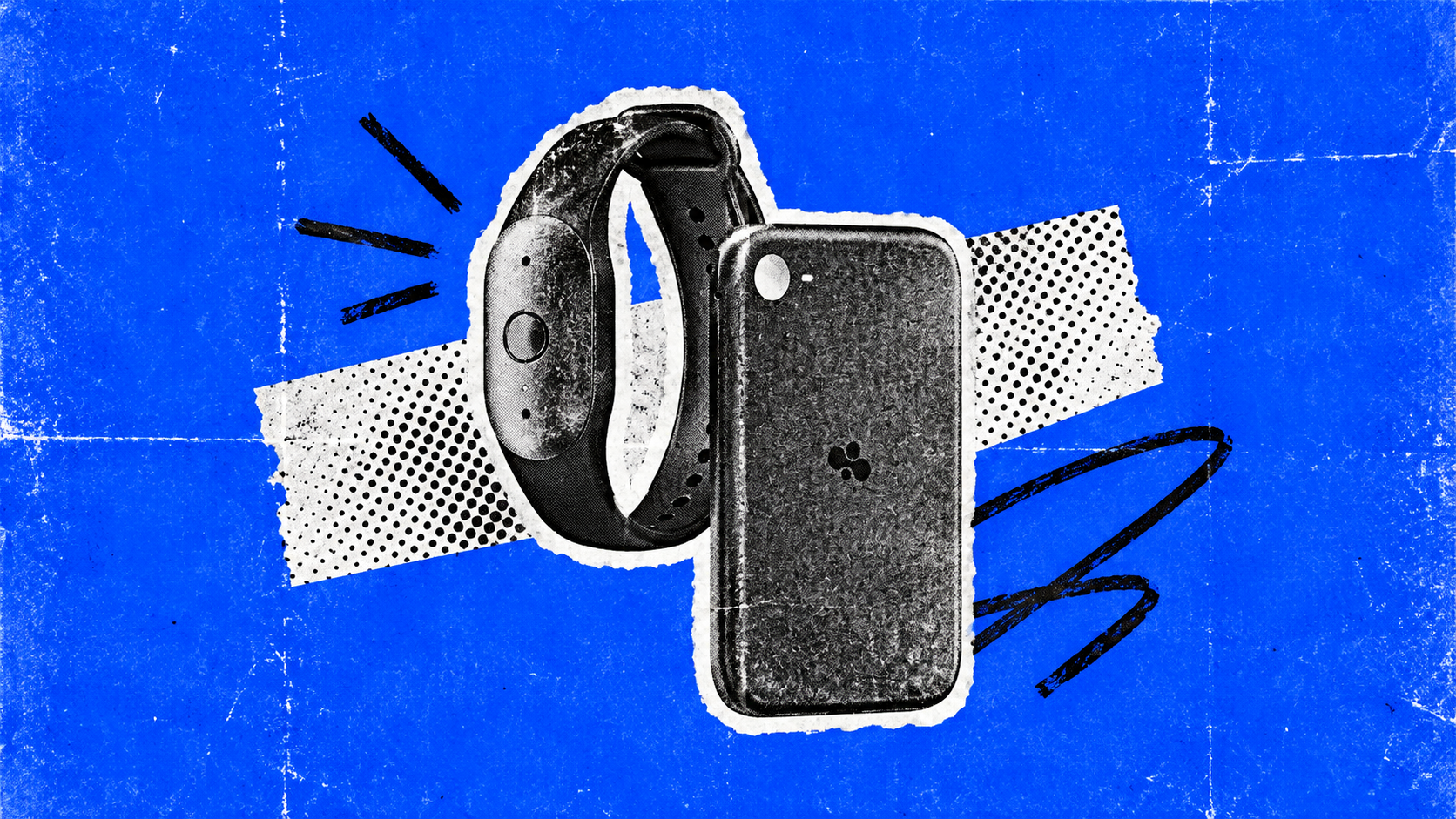
On Thursday, Amazon announced the Bee Frontier and Bee Eclipse, two personal AI gadgets that can listen to you throughout your days to provide summaries, to-do lists, reminders, and scannable directories of your day. While these devices are essentially a take on the AI pin offered by rival Plaud, Amazon is relying on its integration with Alexa as well as a lower price point to give it a competitive edge.
The Bee Frontier can be worn as a pin or as a wristband and was designed to be worn constantly, featuring seven days of battery life, IP67 water resistance, and two microphones with noise filtering that allows you to capture audio anywhere you go. This product is the next iteration of the Bee Pioneer, the startup's debut product that was also an AI note-taking wristband, before it was acquired by Amazon in July of 2022.
The Bee Eclipse serves the same purpose as the Bee Frontier with a different form factor: a slim, lightweight device that attaches to the back of your phone magnetically. It has more than 21 days of battery life, and a visible indicator when it is summarizing a conversation. While other competitors, such as Plaud, have offered the same products before, there are some key differentiators:
- Price: The Bee Frontier is $74.99 and the Bee Eclipse (available soon) is $99.99. Meanwhile, the Plaud Pin is $179 and the Plaud Note is $159.
- Alexa integration: With every purchase, users receive conversation summaries, recaps, and 14-day memory at no additional cost. However, with a Bee Pro subscription of $11.99, users get perks such as integrations with Amazon.com and Alexa+, which allow users to ask Alexa things such as "What are my Bee insights from yesterday?” or “What are my Bee to-dos?”
Of course, an always-on recorder like this raises obvious privacy concerns. Much like Apple’s approach to always-on listening with the S11 chip in the Apple Watch, Bee Private Compute uses a security architecture “that processes your conversations inside a secure and isolated processing environment where no one, including Amazon, can access your data,” according to the release. On top of that, audio isn’t stored, and users can turn off recording whenever they’d like and delete their transcripts.
Our Deeper View
When I first tried the Bee Pioneer in January 2025, what surprised me most was how genuinely useful its insights were. Being able to look back and reflect on the day’s interactions felt valuable on its own, and getting feedback on my actions was an added bonus. Still, two barriers have always held me back from devices like this: the upfront cost of hardware such as Plaud’s NotePin, and the siloed software they run on. If I want these kinds of in-depth insights, I don’t want to open yet another app or deal with a device that can’t connect seamlessly to the ecosystem I already use. That’s why the Alexa+ integration feels so useful. Many people already own an Echo speaker or smart display, and now they can simply ask it for these insights. Even something as simple as “When did my partner say he was coming home on Tuesday?” is helpful.
or get it straight to your inbox, for free!
Get our free, daily newsletter that makes you smarter about AI. Read by 750,000+ from Google, Meta, Microsoft, a16z and more.