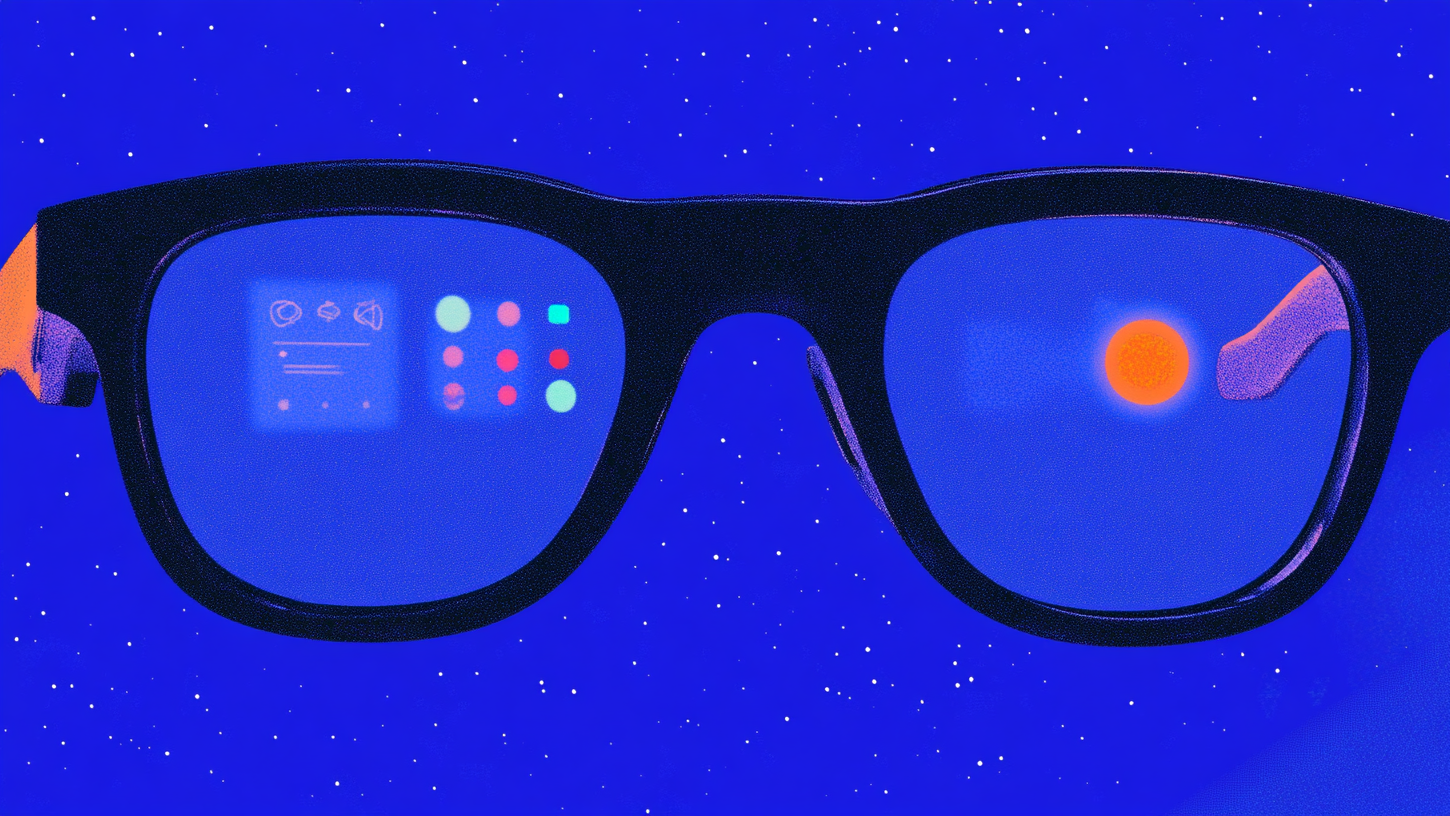



Forget phones. Smartglasses have taken over Mobile World Congress, and Chinese tech giant Alibaba just made its move.
Alibaba's Qwen has made a name for itself as one of the world's leading AI models, with its appeal rooted in high performance and open-source. At MWC, the company unveiled its new AI smartglasses: the Qwen Glasses S1 and the Qwen Glasses G1.
The key distinction between the two is that the S1 features dual in-lens displays, while the G1 does not, making one more like the Meta Ray-Bans and the other more like the Even Realities G2.
The feature set covers what most smartglasses now offer as table stakes: AI assistance, photo and video capture, real-time translation, and notifications. Users control the glasses by tapping or swiping along the sides, pressing a button near the camera to shoot, and managing media playback near the end of the stem.

Alibaba announced Qwen AI glasses at MWC 2026. Photo: Sabrina Ortiz
Qwen has yet to issue a press release, but specs gathered from a demo and booth tour include:
- Audio: Bone conduction mic and 5-mic array
- Battery: Dual-battery system with swappable 272 mAh packs
- Chip: Snapdragon AR1, the same Qualcomm chipset powering the Meta Ray-Bans, as well as a coprocessor.
- Form factor: 8mm ultra-slim temples with custom lenses
- Camera: 12MP POV camera, 3K video, 109-degree ultra-wide FOV, HDR, IMX681, 5P lens
Chatting with Qweenie, the onboard Qwen assistant, testing real-time translation, and previewing photos directly in-lens were all positive experiences. But none of it was new, and at this point, other smartglasses do it in color. What stood out most was the hardware itself.
The glasses were surprisingly light, particularly impressive given the built-in displays. That said, their monochromatic green-tinted HUDs, similar to those on the Even Realities, do make for a lighter-weight design compared to the full-color displays on Meta's frames or the forthcoming Google glasses.
The swappable battery is a genuine differentiator. Battery life remains one of the biggest unsolved problems in smartglasses, since people wear glasses all day and expect them to keep up. Being able to pop out a depleted pack and snap in a fresh one sidesteps that problem.
Our Deeper View
While these glasses are undoubtedly capable and practical, they did highlight just how quickly the space is moving. Had I seen them at CES last year, I would have been incredibly impressed and eager to try them in the real world. But a little over a year later, having now tried smartglasses with full-color in-lens displays, it was harder to be impressed. The addition of color may seem like a minor upgrade, but in my experience, it makes the display feel far more familiar and intuitive, closer to the phones and laptops we already drive daily. If smartglasses are going to truly bridge the physical and digital worlds, the experience has to be as compelling as the devices they're meant to displace.