


As China continues to dominate the open AI ecosystem, competition between the country's labs is growing more heated.
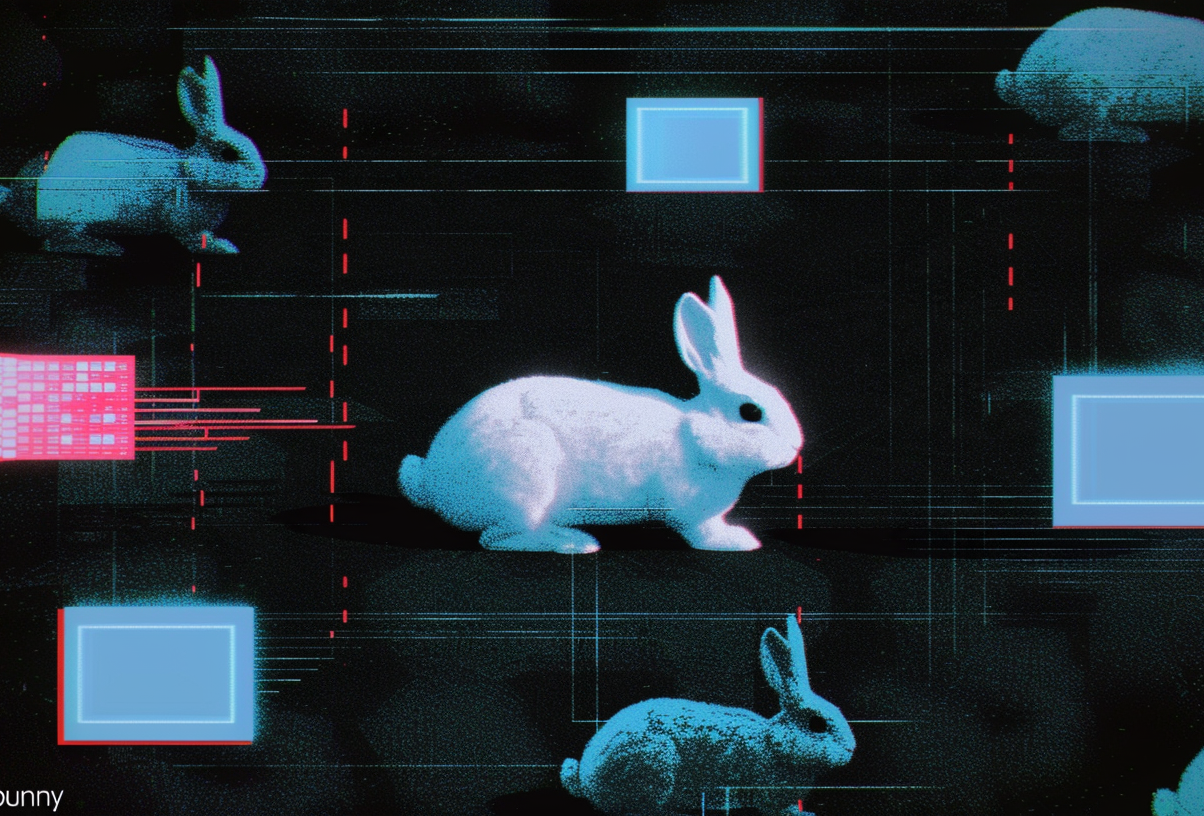
On Monday, Chinese AI lab MiniMax launched an updated version of M3.1 Flash, its latest model which it claims delivers a "generational leap" in agentic tasks, coding, computer use and cybersecurity tasks. The multimodal model, codenamed "space bunny," also features a one million token context window, speeds up online inference threefold and is 70% cheaper than its previous iteration.
In its announcement, the company said that M3.1 Flash "represents our ongoing exploration of the balance between efficiency and capability."
The company claims that M3.1 Flash sweeps the board in a number of benchmarks, including for software engineering, reasoning, long-running tasks, coding and more, outperforming both Chinese competitors like DeepSeek, Moonshot's Kimi, and Z.ai's GLM. Minimax also claims its models outperform OpenAI's GPT-5.6 Sol and Anthropic's Opus 5 in the same metrics.
Additionally, the company claims its model is one of the most cost-effective on the market, running at 15 cents per million input tokens, 60 cents per million output tokens and less than 2 cents per million cached input tokens. For reference, that's a fraction of the price that model providers like OpenAI, Anthropic and Google are selling even their most affordable models for.
However, Minimax isn't the only Chinese lab gaining recognition in recent days. Last week, DeepSeek released V4.1-Flash-1017, its latest model that similarly sports faster task completion, strong performance across benchmarks and improved costs. The model is a refresh of a DeepSeek model that was initially launched in September. Over the weekend, DeepSeek's model snagged the top score on Code Arena's WebDev leaderboard for open models, and 12th place for overall models. Additionally, leaderboards from Artificial Analysis show DeepSeek's model outperforming MiniMax M3.1-Flash in some benchmarks.
Our Deeper View
Open models could completely shift the economics of AI, offering an attractive price point to developers and enterprises that are quickly growing fatigued of the price tags that frontier labs are charging for their proprietary APIs. Updates like these prove that open models are quickly closing the performance gap with their proprietary, closed-source counterparts. While some of this development is happening in the US, such as Nvidia's Nemotron models, Reflection's Beam, and Meta's recent release of Muse Spark Open, the vast majority of open source AI innovation is concentrated in Chinese firms. And the models that these labs put out come with a few caveats, including thinner safety and security measures and accusations of model distillation.