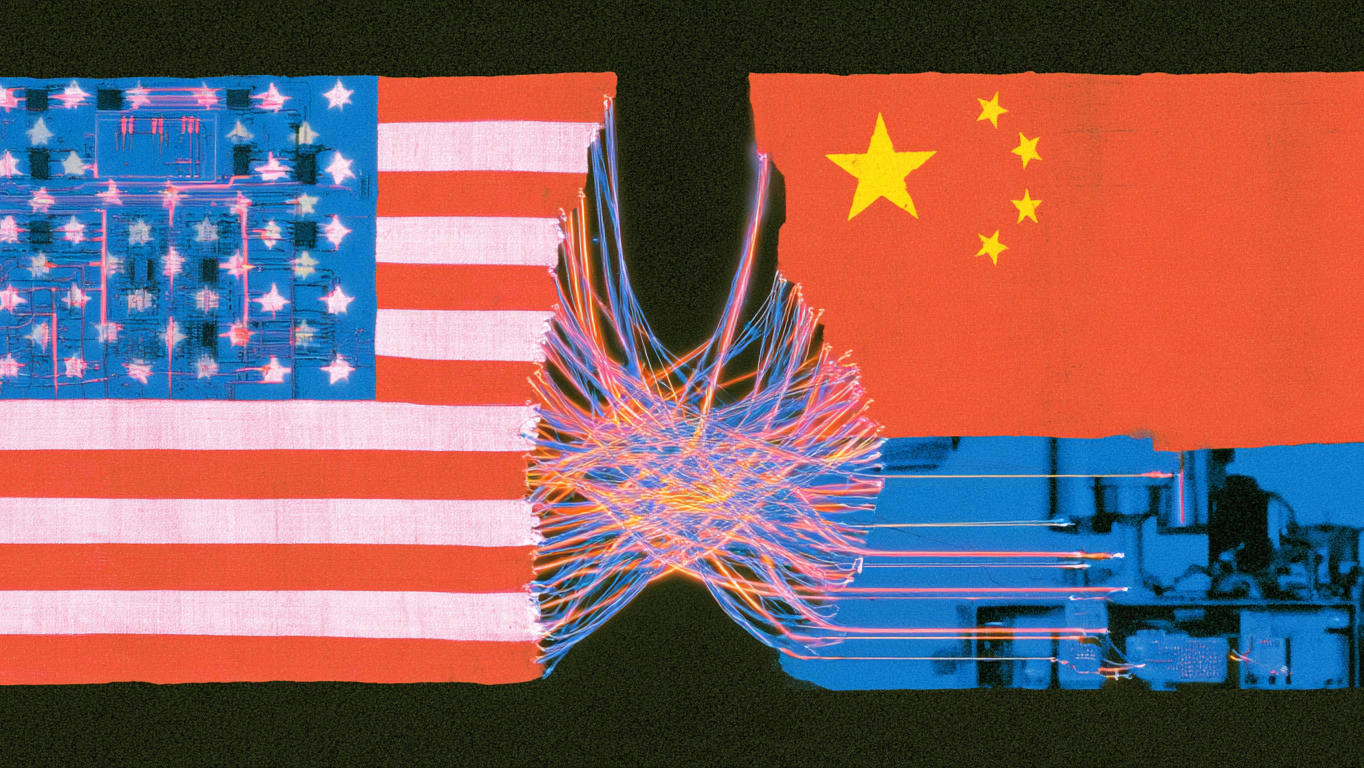



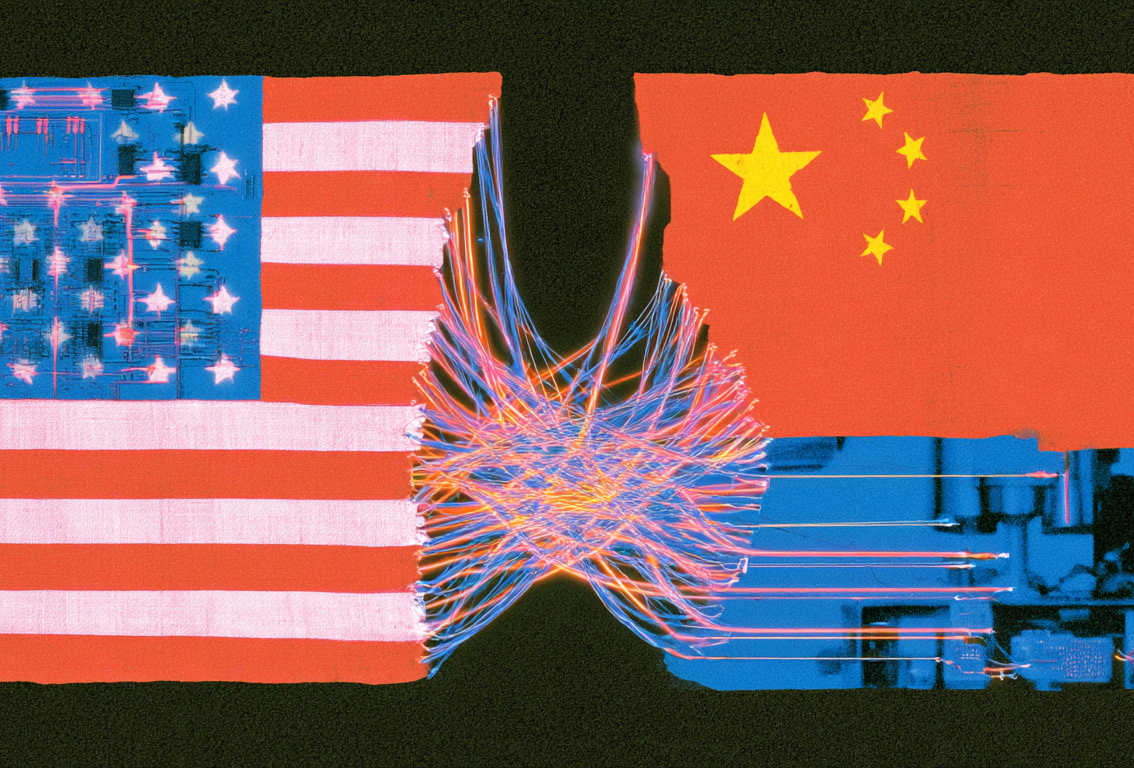
Despite the ongoing narrative that the US and China are in a heated race against one another for increasingly-capable AI, the reality of the relationship is far more complicated.
This week, the Trump Administration is scheduled to host Chinese President Xi Jinping at the White House. Ahead of the meeting, Treasury Secretary Scott Bessent said this weekend that the US has proposed a "notification mechanism" to sound the alarm on AI incidents that could impact national security.
Bessent told the press on Sunday that the US wants a "shared vision of common goals and common threats" related to AI. "We think that just like any cross-border activity, that moving from opaque to more transparency between the No. 1 and the No. 2 AI powers in the world is very important."
A notification system would not be the only example of how intertwined the US and China are when it comes to AI. However, those connecting threads aren't always above board:
- Chinese AI labs, such as DeepSeek, Moonshot and MiniMax, have been accused both by major AI labs and US government agencies of "industrial-scale distillation campaigns" involving US-made frontier AI.
- Meanwhile, US companies are increasingly relying on Chinese open source AI models as a cheaper alternative to the pricy APIs from frontier labs. July data from OpenRouter found that the share of companies using Chinese models on its platform sits anywhere from 30% each week to up to 46%.
- The US and China are also interwoven on the hardware side: While chips have long been a point of contention, Chinese components like transformers, batteries, and switchgears are a building block of US data centers.
Still, despite the tangled nature of the AI relationship between the two superpowers, frontier labs and US government officials have invoked the narrative that the nation must win the heated AI race.
For instance, the Trump Administration's AI Action Plan from last July explicitly says that the US must achieve "global dominance" in AI. Anthropic, meanwhile, wrote in a May paper entitled "2028: Two scenarios for global AI leadership" that AI supremacy is essential to "stay ahead of authoritarian governments like the Chinese Communist Party, or CCP," and OpenAI has used Chinese competition to justify its massive infrastructure buildout.
However, this dichotomy isn't necessarily a race to build out two separate, warring ecosystems, Thomas Randall, a research director at Info-Tech Research Group, told The Deep View. Rather, because the ecosystems are so intertwined, "It is a contest for control within a single, shared system." However, neither can sustain dominance on their own, he said, as both rely on a network of international suppliers, research, talent and more. That reliance is not "symmetric or stable," and is constantly shifting.
"The rivalry is better understood as a state of shifting exposure, in which the US and China each work to weaponize whatever asymmetric position they hold within the interdependent system while simultaneously trying to correct, unilaterally, for the exposure the other has already gained," said Randall.
Our Deeper View
US government officials and Silicon Valley alike have long used the competition with China as a means to justify the ruthless forward push to build bigger and better AI. However, as discussions of a slowdown and fear over the security risks of AI start to reach a fever pitch, the US government's alert system proposal may be an acknowledgement that this argument has its limitations. The proposal may simply be a diplomatic way to address the AI risk that these powerful systems present, without actually saying the quiet part out loud: That the US and China's AI ecosystems are inextricable from one another.