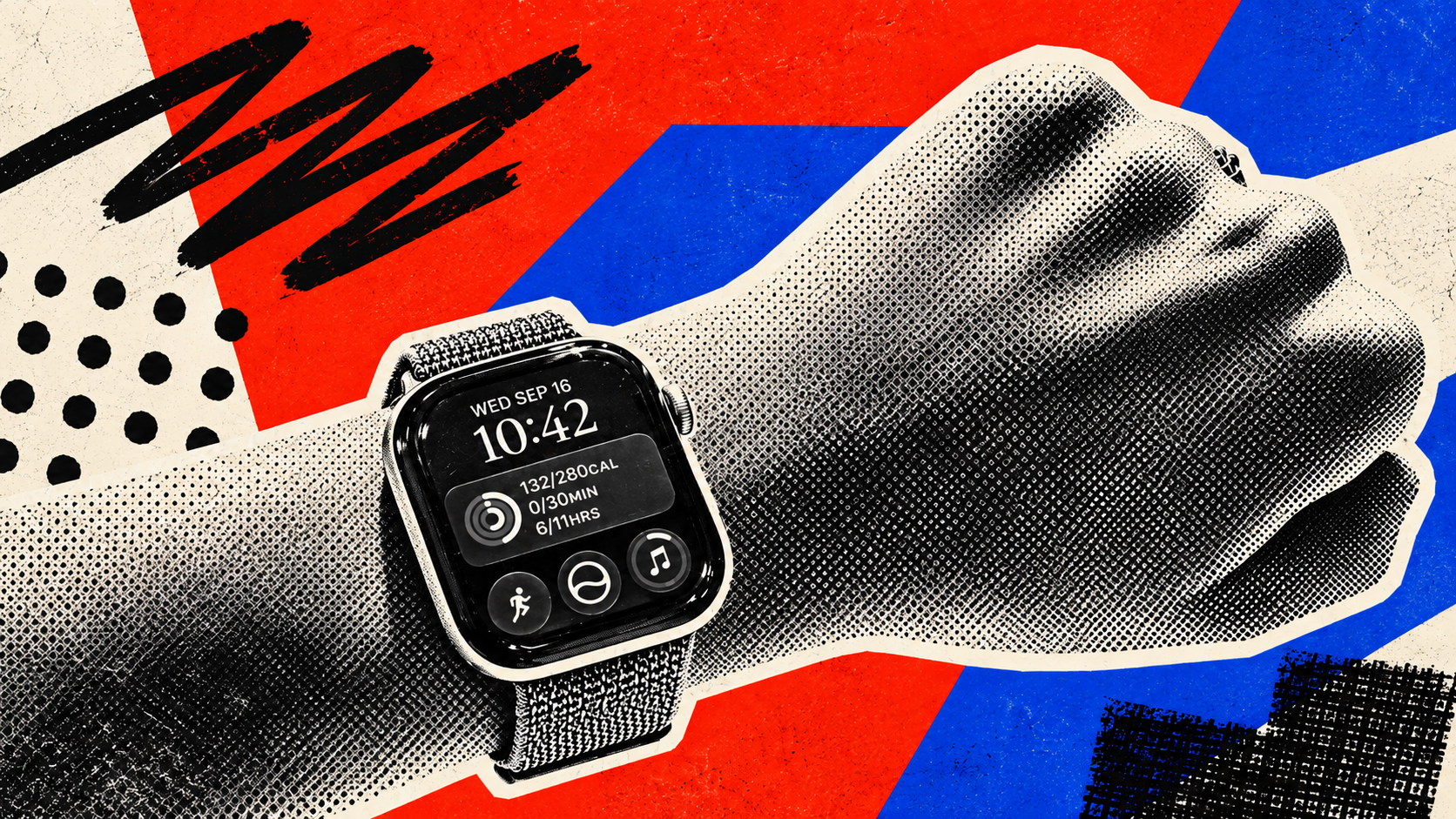
In a world filled with so much AI-washing, Apple has taken a refreshing approach with its Apple Watch Series 12, letting the technology work quietly in the background to enhance the user experience rather than plastering it across the product's marketing material.
Last Wednesday, Apple unveiled the Apple Watch Series 12 and Apple Watch Ultra 4. Both watches run on Apple's new S11 chip, which powers many new AI features and algorithms, as well as the efficiency gains needed to run them. The S11 enables flashy AI features like Siri Recap and Live Rewind, and it drives new health features that give users deeper insight into their bodies.
The all-new Health Sensing System, enabled by both the chip and new optical and electrical heart sensors, can now provide frequent heart rate variability (HRV) readings and heart rate tracking. This is important as it gives users more detailed insight into their health, including stress and recovery. For comparison, HRV is now measured every 5 minutes, whereas previously it was measured roughly every 2 to 4 hours, and heart rate readings occur every 5 seconds, whereas previously they were attempted every 5 minutes.
The unsung heroes are the machine learning models working in the background to help make sense of all this data, which, though Apple is smart not to market it as AI, are still examples of AI doing important work. Other companies should take note of the subdued approach.
More examples of this include the redesigned pedometer model, which is powered by new machine learning algorithms to provide more accurate step tracking, or the new Readiness score, which provides a single 0-10 score with a designation that reads "Recover, Pace Yourself, Ready, or Go For It."
I'm personally super excited to try this feature, but I haven't been able to because you need 7 consecutive days of 4+ hours of sleep, which I haven't yet gotten because I'm a journalist and it's Techtember. Later in the year, users will also be able to see a conversational Readiness summary of their metrics.
Of course, the new and improved Siri AI on watchOS 27 is a signature feature, and it has been a delight using it on the go from my wrist. And we have to mention the new Audio Intelligence features, Live Rewind and Siri Recap, which we've already covered in depth and which will be coming in beta in a couple of months.
A fun feature worth trying now is the improved Shazam, which is meant to let you automatically see the names of songs playing around you, ambiently, without having to tap a widget. This does not mean the widget automatically populates, as the Now Playing feature on Google Pixel phones does. Rather, you have to activate the Smart Stack by tapping your thumb and index finger or by scrolling the Digital Crown upward. Still, Shazam works as described, and it's pretty handy. However, it wasn't quite enough to satisfy my appetite for the rest of the AI features coming later this year, which I'm eager to test and report back.
Our Deeper View
As someone who tried AI fitness coaches as early as 2023 and has seen these summaries typically promoted as AI features, I'm pleased that Apple is not marketing the Apple Watch features as part of Apple Intelligence, but is instead presenting them as useful updates. There are also many more features that I wasn't able to cover in this article, given its length, such as the redesigned Health app and the Health Age feature coming in late 2026. Despite the added features, battery life remains unaffected, thanks to the new S11 chipset. Apple still claims up to 24 hours of battery life, and I found that to be accurate. Charging is super efficient, going from a dead battery to nearly 30% in just ten minutes. When looking for an ideal AI wearable, the things you always want to improve are the data you receive, how quickly you can make sense of it, and battery life. By optimizing its own silicon and the latest machine learning models, Apple has been able to deliver on all three so far. The new Audio Intelligence features could challenge that, so we can't wait to start testing at the end of the year.