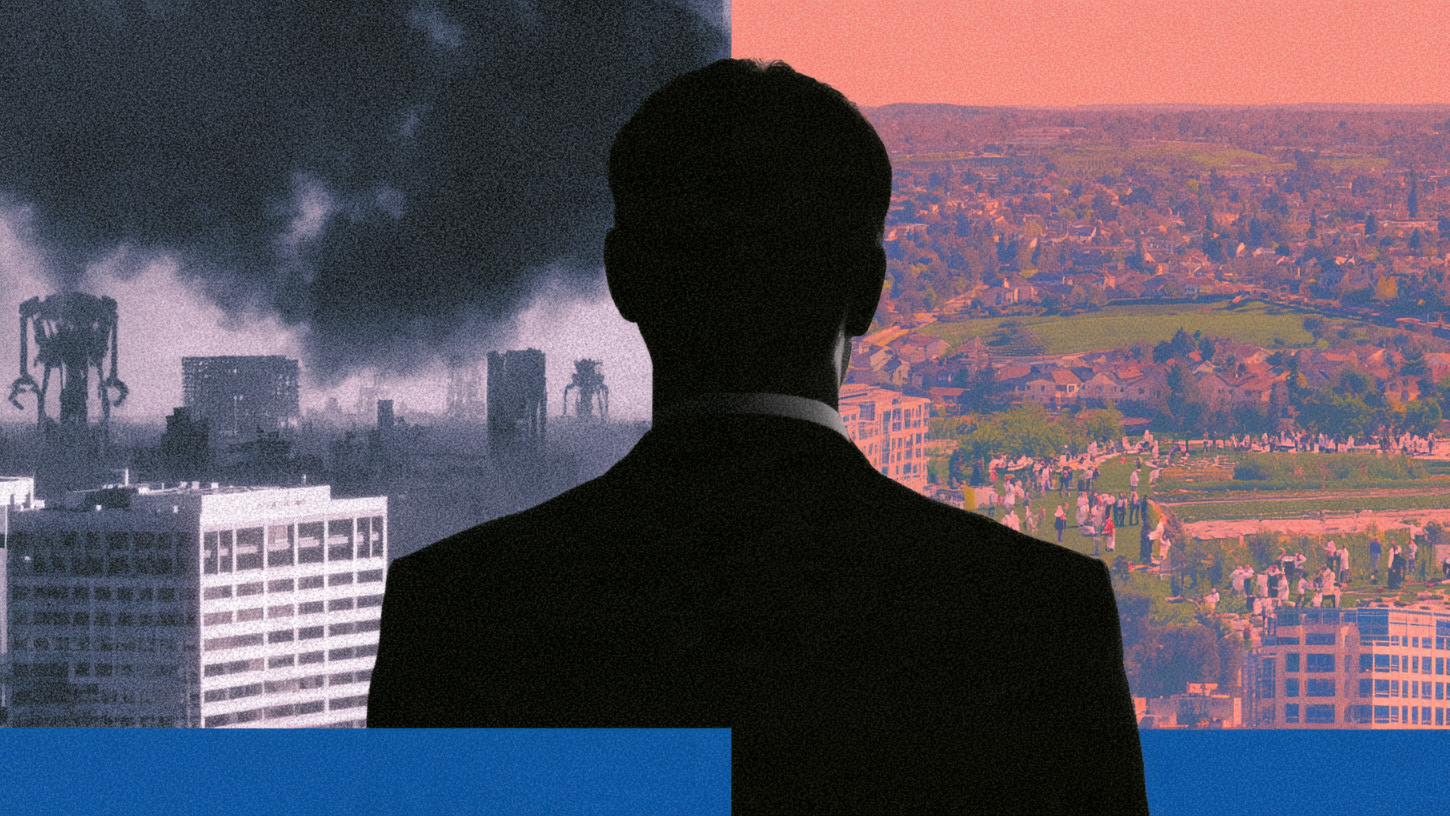



As challenging and confusing as AI safety is right now, it's not AI's biggest problem.
The bigger issue is the lack of a clear, compelling vision for where AI is headed and how it can benefit humanity. Lacking that, AI is badly losing the narrative among the broader public. Multiple surveys from reputable non-partisan organizations such as Gallup and Pew Research show that 60% to 70% of Americans hold negative views about AI. If this were an American football game, AI would be losing by two touchdowns at the end of the first quarter.
To be fair, there's an aspect of this that isn't specific to AI. Humans generally have a very difficult time envisioning a constructive future. That's why such a large percentage of science fiction and Hollywood films about the future tend to be dystopian or post-apocalyptic. That flies in the face of the reality that humanity has long shown a pattern of learning, adapting, and gradually creating more positive outcomes over time.
This disconnect also reflects the fact that only 6% of the American population thinks the world is getting better. In a society that feels more divisive, more conflicted, and more confusing—in part because of a media environment that incentivizes and reinforces those responses—it's not surprising that so many have adopted such a negative stance. And the fact that the antagonist of most of the dystopian narratives tends to be technology itself makes it easy to understand why so many people default to a negative posture on AI, when they haven't been given a compelling reason to think otherwise.
It's simply much easier to predict what could go wrong based on past failures than to imagine something going right in a way we don't have any experience with yet. That's why American playwright George Bernard Shaw famously wrote, "You see things, and you say, 'Why?' But I dream things that never were, and I say, 'Why not?'"
The human race has a long history of both deriding and deifying its visionaries. But when it comes to AI, it's never been more in need of one with a compelling vision.
It's not that some AI leaders haven't tried. Their attempts just haven't landed. The public simply hasn't been convinced by platitudes about AI curing all diseases, leading to infinite abundance, or doing all the work so humans can get universal basic income and decide how to spend their time. None of that sounds believable. But it does sound believable that billionaire business owners will use the technology to automate work and replace employees in large numbers, because that tracks with plenty of behaviors people have already seen.
Our Deeper View
Last week, Google quietly released a powerful report on AI's recent breakthroughs, as Nat Rubio-Licht wrote. Meanwhile, Anthropic's Dario Amodei has tried his hand at casting a bigger vision with his series of essays, especially Machines of Loving Grace. Beyond the aforementioned health care outcomes, which he also dwells on at length, Amodei mentions that AI could accelerate the spread of high-quality expertise to poorer communities, elevating material progress in agriculture, education, and infrastructure—all of which would, by extension, have major impacts on jobs and standards of living. But Amodei is an academic at heart. AI needs a Steve Jobs-level communicator who speaks to the heart and makes complex and confusing topics easy to understand. For that, AI's best hopes so far have been Nvidia CEO Jensen Huang and Stanford's Fei-Fei Li. Whether it's them or others, the fact remains that the public needs storytellers to offer a persuasive vision of why they should be excited about such a powerful technology that they've been warned about for so long.