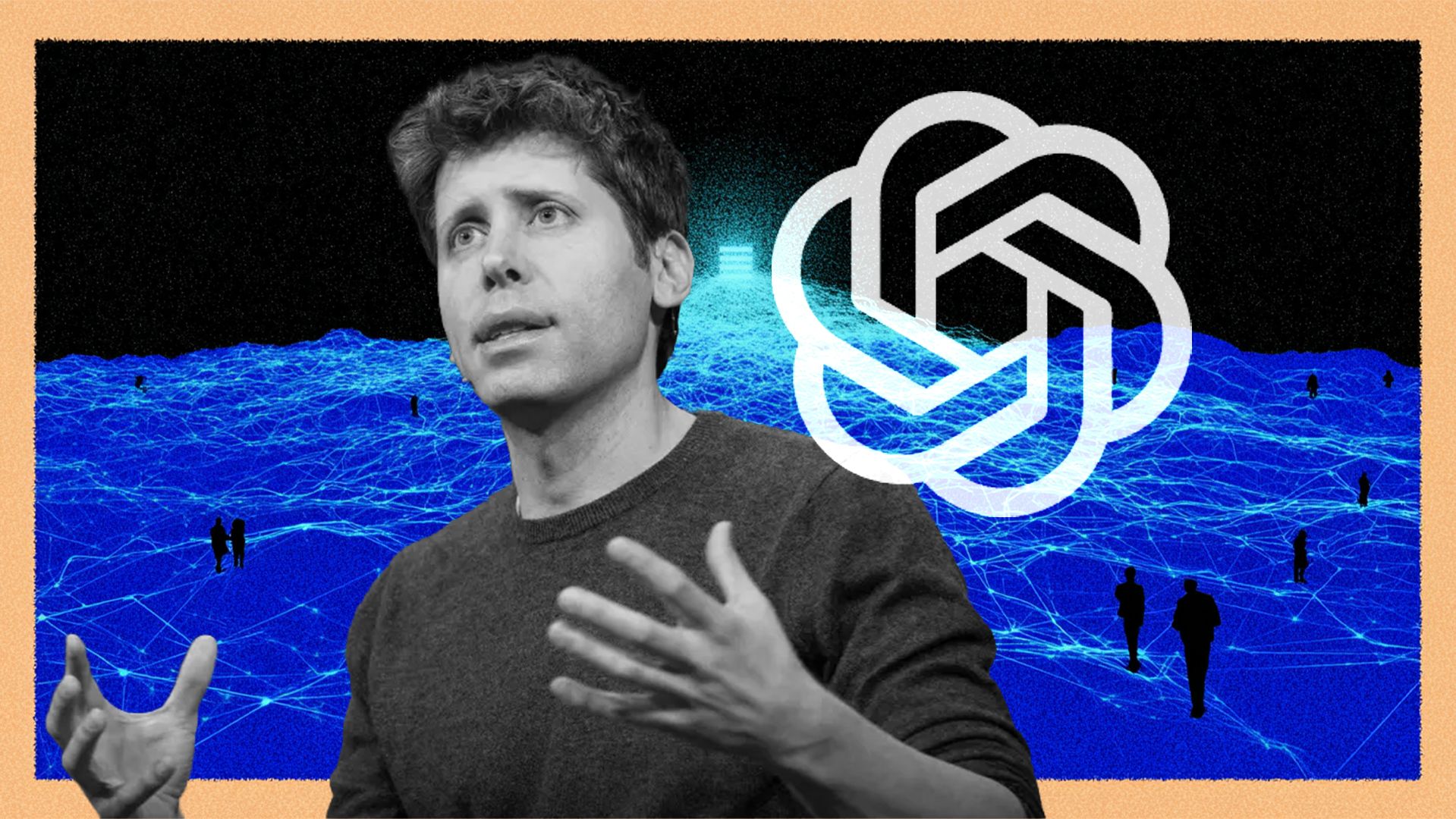



Last month, The Deep View raised the red flag about the risks of AI power centralizing into the hands of too few companies. On Monday, OpenAI CEO Sam Altman published a manifesto calling for the democratization of AI.
"Power in the future can either be held by a small handful of companies using and controlling superintelligence, or it can be held in a decentralized way by people," Altman wrote in his essay titled Our principles. "We believe the latter is much better, and our goal is to put truly general AI in the hands of as many people as possible."
This follows the publication of a policy document earlier this month when OpenAI researchers shared a set of "ideas to keep people first" that included ambitious thought-starters aimed at inviting policy makers and government officials to play a larger role in the development of AI. At that time, Altman emphasized that the public and governments should have an extended period to debate these ideas and make good decisions long before AI precipitates a potential crisis.
Others have recently struck a similar tone on democratization and wider participation:
- Greg Brockman (OpenAI president) told Alex Kantrowitz, "We need this broad conversation. We need lots of people to be aware that if this technology is going to come and change everything for everyone, people need to participate in that. It can't be something that's done off in secret by one centralized group."
- Andrej Karpathy (former Tesla AI lead and early OpenAI cofounder) told Sarah Guo, "Centralization has a very poor track record in the past, in my view. There are a lot of pretty bad precedents [in economic and political systems]. So I want there to be a thing that's maybe not at the edge of capability because it's new and unexplored. But I want there to be a thing that's behind and is a common working space for intelligences that the entire industry has access to. That seems to me like a pretty decent power balance for the industry." Karpathy, of course, is talking less about policy and more about putting the benefits of open-source AI into the hands of a lot more people in the world, which will also help accomplish the democratization mission Altman and Brockman are extolling.
Beyond democratization, Altman's statement also elevates several other principles: empowerment, universal prosperity, resilience, and adaptability. These are the pillars of what Altman lays out as a path for the industry to build AI safely, minimize harm, and maximize the benefits for the broader public.
Our Deeper View
To be clear, Altman and others have mentioned the benefits of democratization and decentralization before. Still, I applaud the fact that OpenAI is placing so much emphasis on it now. The challenge is that all of this is still at the level of theory and dialogue. It's unclear how OpenAI will transform the way it operates to live up to these ideals. And it's even less clear if other AI labs will follow. But crucially, Altman reiterated, "We will resist the potential of this technology to consolidate power in the hands of the few." We need to hold him to that, and expect the same from the leaders of Anthropic, Google, Meta, xAI, Microsoft, Amazon, DeepSeek, and the rest of the current and future frontier labs. Because once these companies go public, all of the financial incentives will favor centralization. And it would take a very strong counterweight to balance it out.