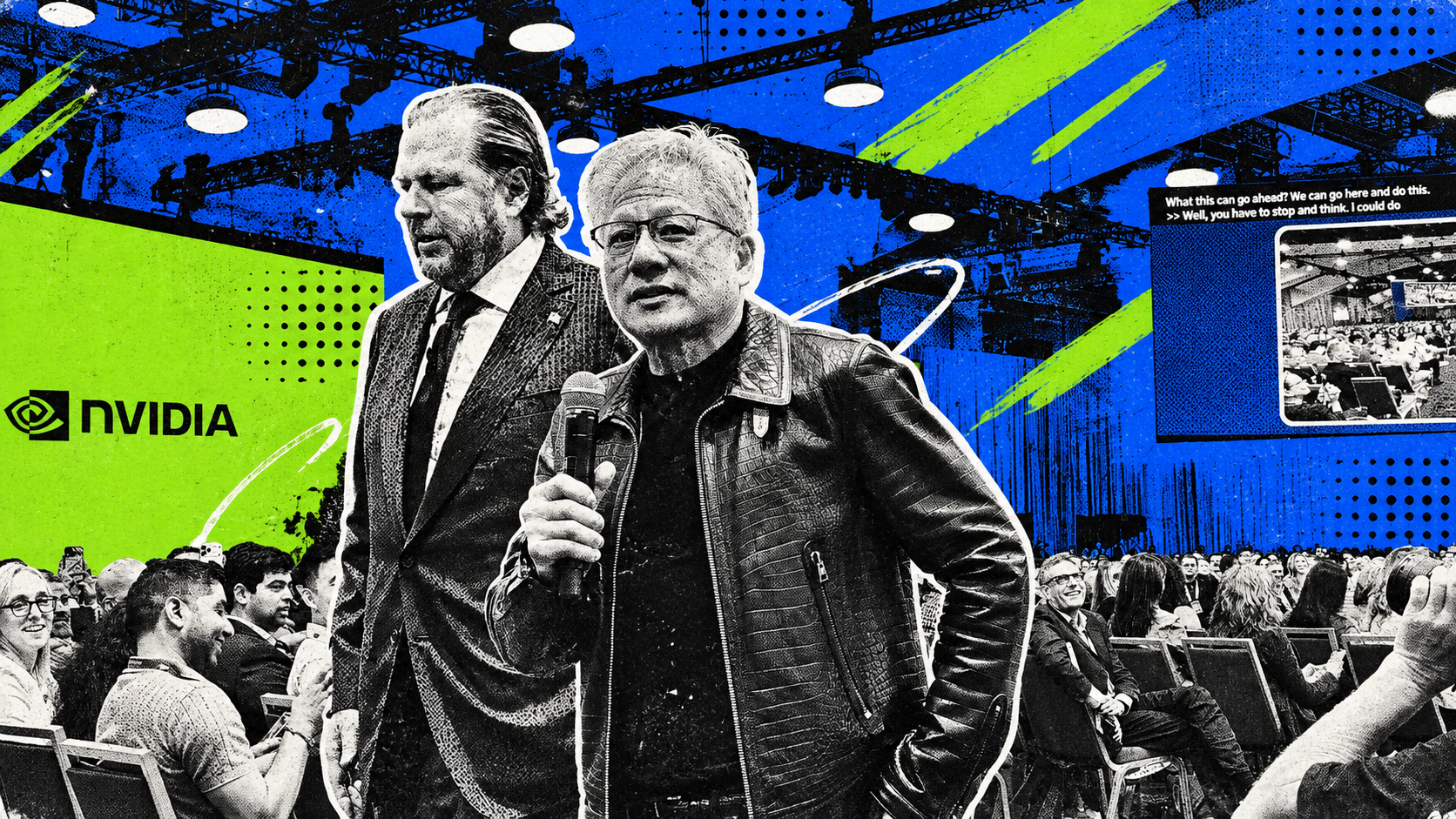


It turns out that Jensen Huang ended up being too big to fire as Nvidia CEO.
On Monday, Nvidia's board of directors unanimously voted to reinstate Huang as CEO, president, and a member of the board, "following a series of discussions and meetings with Mr. Huang, after which the board was satisfied with respect to Mr. Huang’s candor and ability to lead Nvidia," the board stated in a published statement.
According to Reuters, Huang may owe his reinstatement to President Donald Trump and Vice President JD Vance, who reportedly personally intervened in the decision on claims that Huang alone could protect the US open-weight AI market. Meanwhile, Axios reported that Trump pushed to get Huang his job back after allies argued that he was "too big to fail."
This intervention, however, makes the decision to bring Huang back look more like a "a cave-in to external pressure rather than doing what’s truly best in the long-term interests of the company," Brian Jackson, a principal research director at Infotech, told The Deep View. "It seems the board felt pressured to put Huang back in place despite open questions about his judgment as leader."
Still, according to Business Insider, Nvidia employees were happy to have Huang back, greeted on Monday at the company's Santa Clara office to cheers from staff. Huang reportedly told employees: "I'm gonna be a better CEO the second time around."
And the Nvidia staff weren't the only ones excited to see Huang return. Following Huang's reinstatement, tech stocks rallied after seeing a sharp decline over the past few weeks on his ousting.
- Nvidia stock itself was up more than 31% on Monday, closing at $165.05 per share after ending the week last week at around $130 per share.
- That explosion extended to other tech stocks as well, creating a $2 trillion swell in market cap for the Nasdaq 100. AI cloud firms like Nebius and CoreWeave each saw a 20% gain in their share prices following the news.
However, not everything is going back to the way it was: One of the changes made after Huang's resignation on November 12, the appointment of Harvey Jones as board chair, will remain even after Huang's return. The interim CEO, Colette Kress, will return to her role as CFO. Interestingly, Kress led Nvidia's earnings call last week and hinted that the company might revisit its much-scrutinized circular financing deals. This follows International Monetary Fund director Kristalina Georgieva calling out circular financing as a significantly risky practice last week.
Additionally, the chaos generated by the Huang whiplash could force fellow hyperscalers to get serious about developing their own alternative to Nvidia's chips supply, Jackson said. "Could they be looking at Nvidia as a riskier partner today? If so, it might incentivize them to invest more in their own chip development." Google, Microsoft, and Amazon are all now producing their own silicon, for example.
Our Deeper View
One thing that Huang's reinstatement makes clear is just how volatile the AI market is. It highlights just how much power has been concentrated in the hands of so few people, with the actions of one man creating domino effects that ripple through the entire economy. As Jackson put it, Huang's reinstatement suggests that Nvidia's valuation is "more about a cult of personality around one leather-jacket-clad leader than the fundamentals of the business." But beyond Nvidia, it also begs the question of whether the market should be this temperamental. With trillions of dollars and a potentially society-defining technological transformation on the line, is it a dangerous sign for an industry with so much at stake to be so easily destabilized by the affairs of one CEO?